
Latest Posts
- How GLP-1 Medications Help People Build Healthier Long-Term Eating Habits

- Why Doctors Are Increasingly Recommending GLP-1 Medications for Type 2 Diabetes

- The Biggest Myths About Placebo Groups in Clinical Trials

- How to Protect Your Joints So They Last a Lifetime

- The Connection Between Physical Health and Mental Wellbeing

Categories
Archive
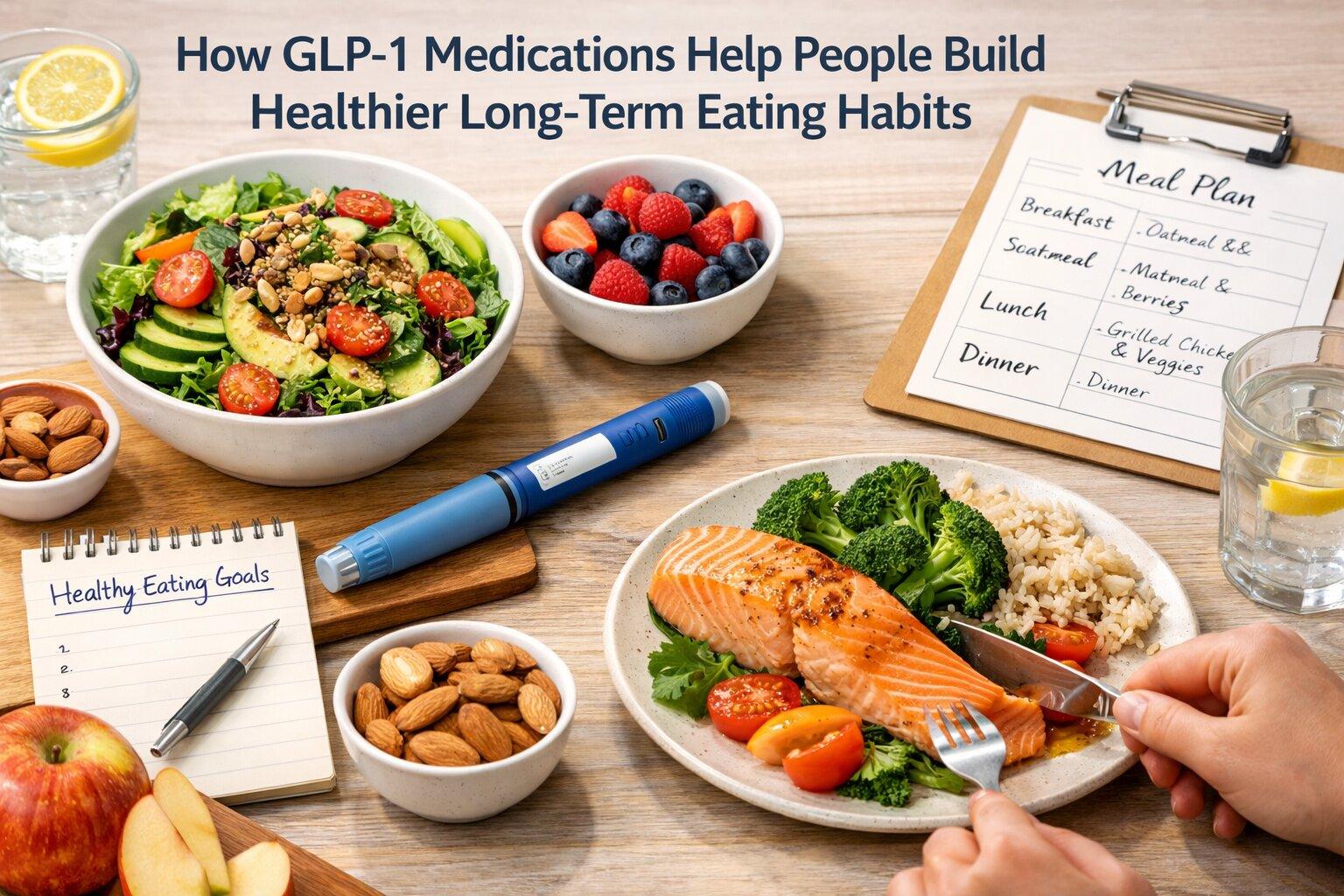
Food choices do not happen in a vacuum. They are driven by hunger signals, cravings, emotional patterns, and the biological pull toward high-calorie foods that the brain has been wired to seek out. For people who have struggled to change their eating habits despite genuine effort, GLP-1 medications are showing up in the research as something that shifts that entire equation.
What Changes in the Brain When GLP-1 Medications Are Active
The hypothalamus is the part of the brain that regulates hunger and fullness. GLP-1 receptor agonists reach receptors in that region and reduce the intensity of hunger signals between meals. People on these medications consistently report that the mental noise around food, the constant thinking about what to eat next, what to avoid, or when to stop, quiets down noticeably.
That shift is not willpower. It is pharmacology changing the baseline the brain is working from. When hunger is less urgent and fullness arrives sooner, the decisions that follow are different. Smaller portions feel satisfying. Skipping a snack does not feel like deprivation. Eating slowly becomes easier because the pressure to keep eating is lower.
How Reduced Cravings Lead to Lasting Habit Change
Cravings for high-fat and high-sugar foods are partly biological. The brain’s reward system responds to those foods with dopamine, reinforcing the behavior of seeking them out. Research on GLP-1 receptor agonists suggests these medications dampen that reward response, making highly processed foods less appealing than they were before.
Patients in clinical settings frequently describe losing interest in foods they previously found hard to resist. Alcohol cravings have also been reported to decrease in some users, a finding that has opened new research directions. The mechanism is still being studied, but the pattern across patient reports is consistent enough to be clinically meaningful.
When cravings drop, the effort required to make better food choices drops with them. A person who no longer feels a strong pull toward ultra-processed foods does not need to white-knuckle their way through a grocery store. The habit change becomes sustainable because the biological resistance to it has been reduced.
Slower Eating as a Natural Outcome
GLP-1 medications slow gastric emptying, which is the rate at which food leaves the stomach. Food stays in the stomach longer, which sustains the feeling of fullness across a longer window after eating. One practical effect of this is that people tend to eat more slowly and stop earlier in a meal than they did before starting the medication.
Eating slowly is one of the most consistently recommended behaviors in nutrition guidance, and one of the hardest to maintain without a biological reason to do so. GLP-1 medications create that reason. The stomach is still processing the previous meal when the next one starts, which naturally puts a brake on how much gets consumed.
Over time, eating at a slower pace becomes the new normal. Portion sizes that once felt too small start feeling appropriate. The rhythm of eating changes, and with it the relationship a person has with food during meals.
The Role of Consistency in Building New Patterns
Habit formation depends on repetition. A behavior that happens once is an event. A behavior that happens daily for months becomes a pattern the brain starts to automate. GLP-1 medications give people a consistent biological environment in which healthier eating behaviors have room to repeat and reinforce.
Someone who eats smaller portions every day for six months is not just eating less. They are building a new reference point for what a normal meal looks like. Someone who stops reaching for high-sugar snacks throughout the day is gradually restructuring what their afternoon routine involves. The medication creates the conditions. The repetition builds the habit.
This is why the conversation around GLP-1 medications and eating habits is not just about weight loss. It is about what happens to a person’s relationship with food over the months they spend on the medication, and whether those changes carry forward.
What Happens to Eating Habits Over Time
Long-term data on GLP-1 medications and eating behavior is still accumulating, but early findings are encouraging. Patients who have been on these medications for a year or more report sustained changes in food preference, meal size, and eating frequency. Many describe the changes as feeling like a reset rather than a restriction.
The distinction matters. Restriction implies ongoing effort against a pull that has not gone away. A reset suggests the underlying pull has changed. People who describe their experience this way are reporting that their appetite and food preferences feel genuinely different, not that they are managing the same old appetite with a medication doing the heavy lifting.
Whether those changes persist after stopping the medication varies by individual and is an active area of research. What the current evidence supports is that the time spent on a GLP-1 medication is a genuine window for building eating habits that serve long-term health.
How Healthcare Providers Are Using This Window
Physicians and dietitians who work with patients on GLP-1 medications increasingly treat the medication period as a structured opportunity. The appetite changes create space to introduce new foods, practice portion awareness, and establish meal patterns that would have been harder to maintain before. Nutrition counseling alongside the medication has shown better outcomes than either approach alone.
That combination reflects a broader understanding of what these medications do and do not do on their own. They shift the biology. The habits that form during that shift are what the patient carries forward. Building those habits intentionally, with support, is how the long-term benefit gets locked in.
This article is for informational purposes only and does not constitute medical advice. Always consult a qualified healthcare professional before starting, stopping, or changing any medication or treatment plan.