
Latest Posts
- How GLP-1 Medications Help People Build Healthier Long-Term Eating Habits

- Why Doctors Are Increasingly Recommending GLP-1 Medications for Type 2 Diabetes

- The Biggest Myths About Placebo Groups in Clinical Trials

- How to Protect Your Joints So They Last a Lifetime

- The Connection Between Physical Health and Mental Wellbeing

Categories
Archive
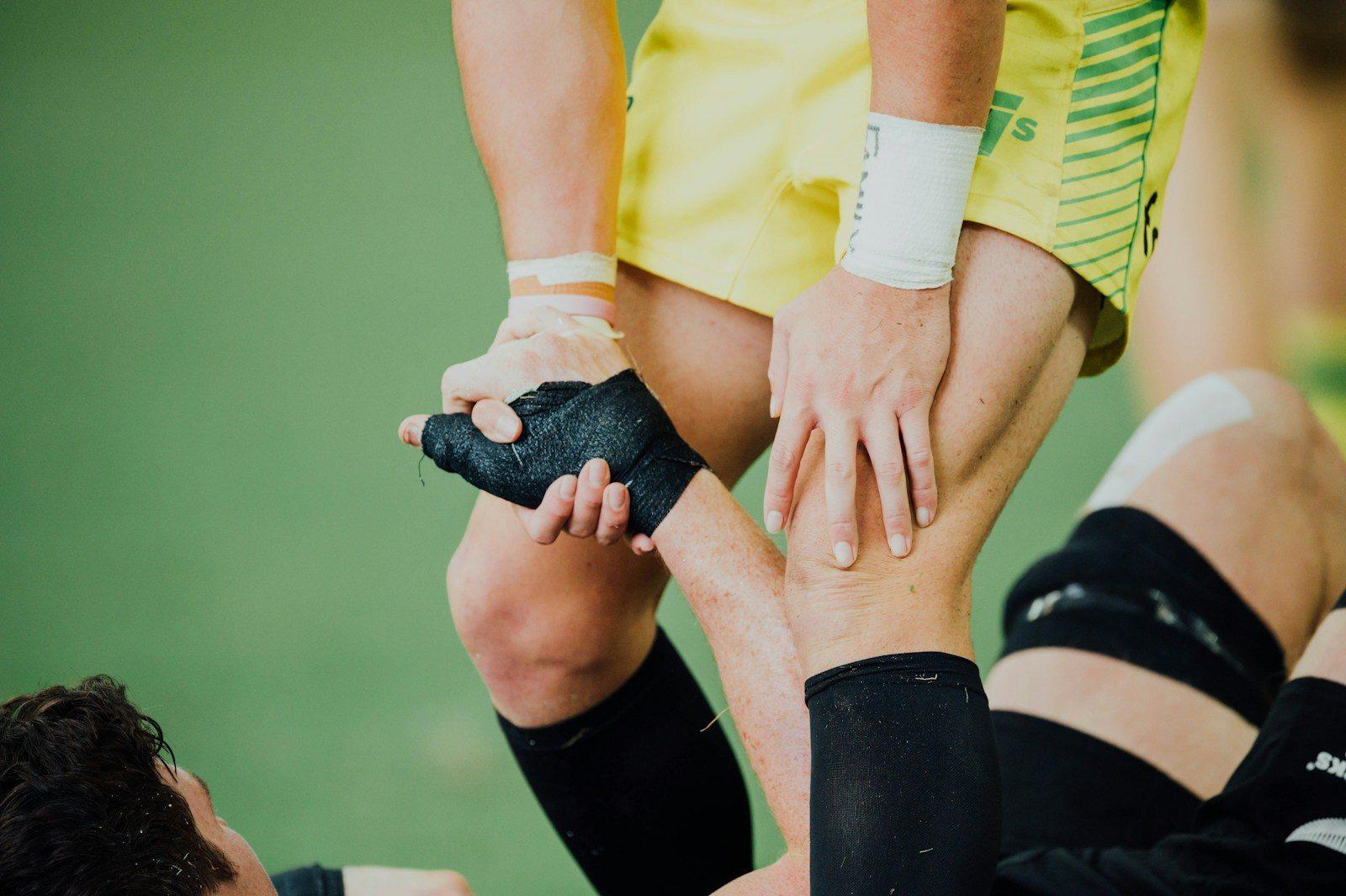
Joints are one of those things you stop noticing when they work well and cannot stop noticing when they do not. The knee that bends without complaint every time you climb stairs, the hip that rotates freely when you step out of a car, the shoulders that lift without hesitation when you reach for something overhead. These movements happen so automatically when joints are healthy that most people give them no thought whatsoever until something changes. Then the ache that was not there yesterday arrives, or the stiffness that takes longer each morning to shake off, or the sharp discomfort that makes a previously effortless movement suddenly require management.
Joint health is worth thinking about before any of that happens, not because joint problems are inevitable, but because the choices made across years of ordinary daily life have a cumulative effect on joint tissue that becomes increasingly difficult to reverse once the damage is established. Cartilage, the smooth tissue that cushions the ends of bones within a joint, has very limited capacity for self-repair. It has no direct blood supply, which means it receives nutrients through the movement of joint fluid rather than through circulation. This makes it simultaneously dependent on movement for its health and vulnerable to the kind of damage that movement performed incorrectly, excessively, or without adequate support can produce.
The good news is that most of the factors that determine long-term joint health are modifiable. They are the product of habits, choices, and understanding rather than genetics or luck, and building awareness of them earlier rather than later changes the trajectory of joint health in ways that show up most clearly decades down the line.
Understand What Joints Need to Stay Healthy
Joints are not passive structures that simply exist between bones. They are active biological systems that require specific inputs to remain healthy across a lifetime. Understanding what those inputs are explains why the habits that protect joints are the ones they are.
Movement is the most fundamental input. As noted above, cartilage receives its nutrition through the movement of synovial fluid within the joint capsule. Regular movement, distributed across the day rather than concentrated in single exercise sessions with long periods of inactivity between them, keeps this fluid circulating and the cartilage nourished. Prolonged immobility, whether from a sedentary lifestyle or from a period of enforced rest, reduces cartilage nutrition and accelerates the degenerative changes associated with osteoarthritis.
Muscle strength is the second critical input. The muscles surrounding a joint are its primary protective mechanism against excessive load and poor alignment. Strong quadriceps protect the knee from the shear and compressive forces that walking, running, and stair-climbing generate. Strong hip abductors and external rotators protect both the hip and the knee by maintaining proper alignment through the lower extremity during weight-bearing activity. Strong rotator cuff muscles protect the shoulder joint by centering the humeral head in the glenoid fossa throughout the range of arm movement. When these supporting muscles are weak, the mechanical load that movement generates is transmitted more directly through the joint structures themselves, accelerating wear on cartilage and increasing injury risk.
Appropriate load is the third input. Joints are designed to handle load. They need it to remain healthy. The issue is not load itself but the relationship between the load applied and the capacity of the joint and its supporting structures to manage it safely. Too little load leads to the deconditioning of both muscle and bone. Too much load relative to current capacity accelerates joint damage. The goal is progressive, appropriate loading that builds capacity over time rather than exceeding it.
Maintain a Healthy Body Weight
Body weight is one of the most significant modifiable factors in long-term joint health, particularly for the weight-bearing joints of the knee, hip, and ankle. The forces transmitted through the knee during walking are approximately three to four times body weight. During stair climbing, they reach five to six times body weight. This means that even modest reductions in body weight produce disproportionately large reductions in the mechanical load experienced by weight-bearing joints across the thousands of steps taken every day.
Research has found that every pound of body weight lost reduces the load on the knee joint by four pounds across the course of a typical day of walking. For someone carrying thirty excess pounds, that represents a reduction of 120 pounds of force per step on each knee, multiplied across eight to ten thousand daily steps. The cumulative difference in cartilage loading across years is substantial and translates directly into meaningful differences in osteoarthritis risk and progression.
Weight management for joint health does not require achieving an ideal body weight or following a specific dietary protocol. Even modest reductions in body weight for those carrying excess produce meaningful and measurable reductions in joint loading and improvements in joint pain and function for people with existing joint conditions.
Build and Maintain Muscle Strength Around Every Joint
The most consistently supported intervention for joint health and longevity across the research literature is resistance training that builds and maintains the muscular support around vulnerable joints. This is true for both healthy joints that need protection and for joints already showing signs of degenerative change where stronger surrounding muscles reduce pain and improve function.
For the knee, the most important muscles to prioritize are the quadriceps, which control the rate of knee flexion during loading and absorb the forces of impact. The hamstrings, which balance the quadriceps and protect the knee from hyperextension. The hip abductors and external rotators, which control the alignment of the knee during single-leg loading activities like walking, running, and stair-climbing. Weakness in any of these groups shifts mechanical stress in ways that accelerate cartilage wear and increase injury risk.
For the hip, the gluteal muscles, particularly gluteus medius and gluteus maximus, are the primary protectors. They control pelvic stability during single-leg stance and manage the forces transmitted through the hip joint during walking and weight-bearing activity. Hip strength training is consistently shown to reduce both hip and knee pain in research populations, reflecting the interconnected nature of lower extremity joint loading.
For the shoulder, the rotator cuff muscles that stabilize the humeral head within the shallow glenoid socket are the most important targets. These four muscles, the supraspinatus, infraspinatus, teres minor, and subscapularis, work together to maintain proper joint mechanics through the full range of shoulder movement. Weakness or imbalance among them is the most common underlying factor in shoulder pain and injury across all age groups.
For the spine, the deep core muscles including the transversus abdominis, multifidus, and pelvic floor create the internal pressure and segmental stability that protect intervertebral discs and facet joints from the forces generated by lifting, bending, and sustained posture.
Move Well, Not Just Often
The quality of movement matters as much as its quantity for long-term joint health. Joints loaded repeatedly through poor mechanics accumulate stress at specific points within the joint surface that healthy movement distributes more broadly. Over time, focal loading accelerates cartilage breakdown at those points in ways that broad, well-distributed loading does not.
Learning and maintaining good movement mechanics for the activities you perform regularly is therefore a genuine joint health investment. This includes basic patterns like squatting with the knees tracking over the feet rather than collapsing inward, hinging at the hips with a neutral spine rather than rounding through the lower back, reaching overhead without shrugging the shoulder and losing rotator cuff centration, and walking with adequate hip extension rather than a shuffling pattern that loads the hip flexors and lumbar spine asymmetrically.
For people who exercise regularly, this means paying attention to technique rather than simply accumulating volume or intensity. A running technique that produces excessive ground contact time and poor hip extension loads the knee differently and more damagingly than a technique with appropriate mechanics, regardless of how many miles are covered. A squat performed with knees caving inward under load stresses the medial compartment of the knee in ways that a well-aligned squat does not.
Working with a physical therapist, movement coach, or experienced trainer to identify and correct movement patterns that are placing excessive or asymmetric load on joints is one of the most effective and most underused joint health interventions available.
Prioritize Recovery and Listen to Pain
Pain during exercise or movement is the joint’s most direct communication method, and dismissing it as something to push through is one of the most common ways people accelerate joint damage beyond what activity itself would produce. There is an important distinction between the discomfort of muscular fatigue and exertion, which is a normal feature of training, and joint pain during movement, which is a signal that the load, mechanics, or volume of activity has exceeded what the joint can currently tolerate safely.
Respecting that signal by modifying activity, reducing load, or addressing the underlying cause through professional assessment protects joint integrity over the long term in ways that ignoring it does not. Many of the most significant joint injuries and the accelerated onset of osteoarthritis in athletes and active individuals are the downstream consequence of repeatedly overriding the pain signal that the joint was using to communicate that something needed to change.
Recovery between exercise sessions is where the tissue adaptation that exercise stimulates actually occurs. Adequate sleep, sufficient protein to support tissue repair, and appropriate rest between loading sessions give the joint structures and surrounding muscles the time and resources to adapt to training rather than simply accumulating fatigue and micro-damage without the recovery that converts that stimulus into resilience.
Anti-inflammatory nutrition, including adequate omega-3 fatty acid intake from fatty fish or supplementation, consistent consumption of antioxidant-rich vegetables and fruits, and minimizing the dietary drivers of systemic inflammation like refined sugar and ultra-processed foods, supports the joint environment by reducing the chronic low-grade inflammation that accelerates cartilage breakdown and contributes to joint pain.
The exercises that protect joints most effectively without placing excessive stress on already vulnerable tissue are explored in detail as part of a broader look at low-impact joint exercises that build the strength and mobility joints need while respecting their current capacity and limitations.
Small Consistent Choices Across Decades
Joint health is not determined by any single choice or any single period of life. It is the product of small, consistent choices made across decades that either support or gradually undermine the structural integrity of the tissues that allow pain-free movement.
Moving regularly throughout the day rather than sitting for hours and exercising in a single burst. Building and maintaining the muscular strength that protects joints from excessive mechanical load. Managing body weight to reduce the forces that weight-bearing joints must absorb with every step. Moving with attention to mechanics rather than simply accumulating volume. Listening to pain signals rather than pushing through them. Eating in ways that reduce systemic inflammation rather than driving it.
None of these are dramatic interventions. All of them are within reach as daily habits. And their cumulative effect across a lifetime is the difference between joints that remain capable and comfortable well into the later decades and ones that begin limiting the activities and independence that most people want to hold onto for as long as possible.