
Latest Posts
- How GLP-1 Medications Help People Build Healthier Long-Term Eating Habits

- Why Doctors Are Increasingly Recommending GLP-1 Medications for Type 2 Diabetes

- The Biggest Myths About Placebo Groups in Clinical Trials

- How to Protect Your Joints So They Last a Lifetime

- The Connection Between Physical Health and Mental Wellbeing

Categories
Archive
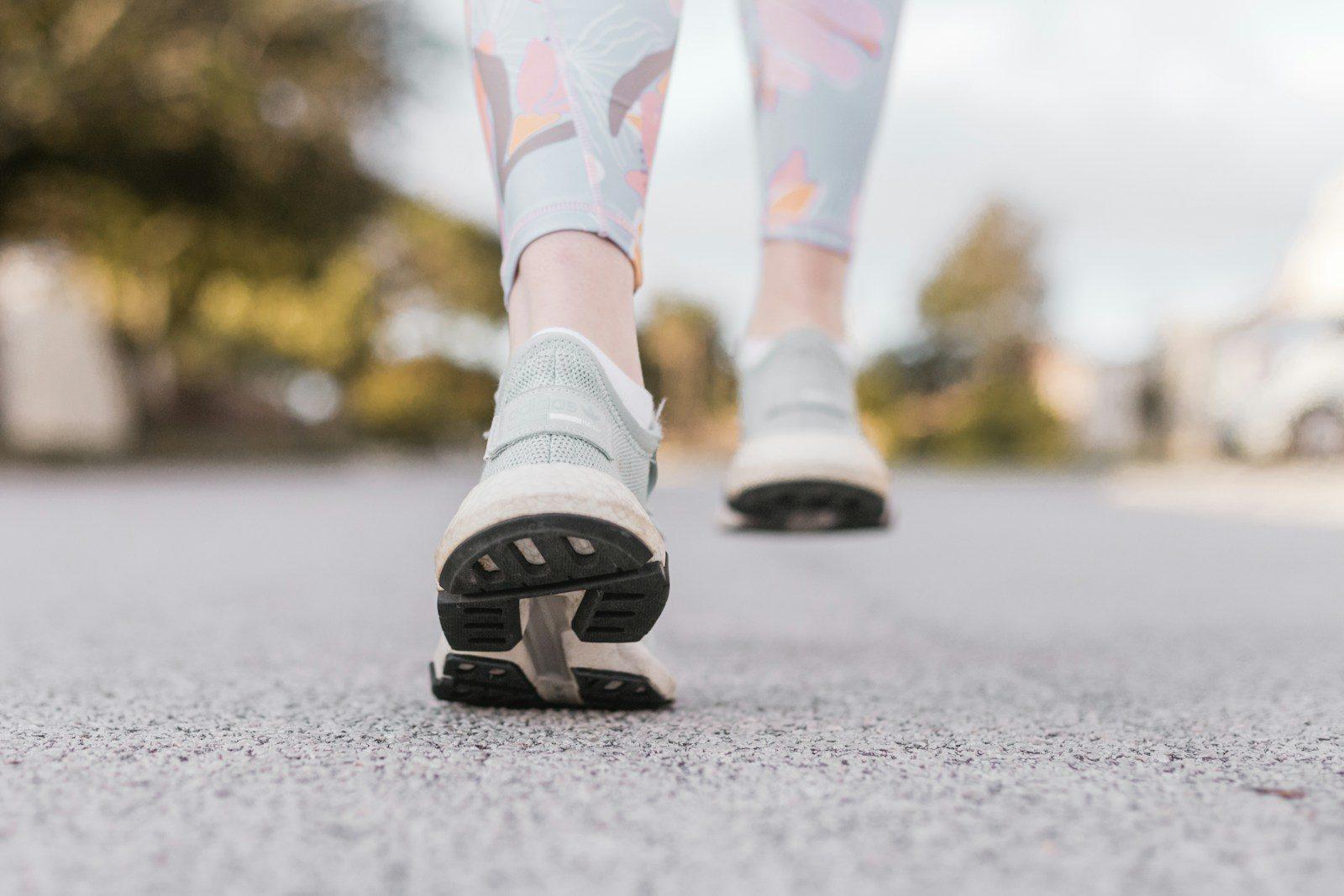
Walking is the most democratic form of exercise that exists. It requires no gym membership, no special equipment beyond a pair of supportive shoes, no technical skill, and no particular level of existing fitness to begin. It is available to virtually every body at virtually every age, and it scales naturally from a gentle starting point to a genuinely challenging cardiovascular workout depending on pace, terrain, and duration. Despite all of this, walking is chronically underestimated as a tool for weight loss by people who assume that effective fat loss requires more intensity, more complexity, or more suffering than a simple walk can deliver.
The research on walking and weight management tells a different and more encouraging story. Consistent walking, structured with intention rather than treated as a casual afterthought, produces meaningful and sustainable weight loss results across populations including those who have struggled with more intensive exercise approaches. The mechanism is not complicated. Walking burns calories, reduces stress hormones that drive fat storage, improves insulin sensitivity, supports the quality of sleep that regulates appetite hormones, and builds the kind of sustainable daily movement habit that more intense exercise often fails to establish long-term.
Making every step count is not about obsessing over metrics or turning a pleasant walk into a stressful performance evaluation. It is about understanding the variables that determine how much benefit your walking delivers and adjusting them intentionally to get the most out of the time you invest.
Why Walking Works for Weight Loss
The caloric expenditure of walking is real and meaningful when accumulated consistently across days and weeks. A 70-kilogram person walking at a moderate pace burns approximately 250 to 300 calories per hour. Three thirty-minute walks daily across a week adds up to roughly 1,500 to 2,100 calories of additional expenditure, which is a meaningful contribution to a caloric deficit without the recovery demands, injury risk, or motivational attrition that higher-intensity approaches produce in many people.
Beyond direct caloric expenditure, walking has several indirect effects on weight management that receive less attention than they deserve. It reduces cortisol levels, and chronically elevated cortisol drives abdominal fat storage and increases appetite for high-calorie foods in ways that undermine weight loss efforts regardless of how carefully calories are managed. Walking after meals specifically reduces the post-meal blood sugar spike that, when repeated across multiple meals daily, drives fat storage and insulin resistance over time. Research has found that even a ten-minute walk after eating meaningfully blunts the glycemic response compared to sitting.
Walking also tends to replace sedentary time rather than replacing other physical activity, which means its caloric contribution adds to total daily energy expenditure rather than simply substituting for another form of movement. The person who walks thirty minutes at lunch has typically not removed another form of exercise from their day. They have simply moved during time that was previously spent sitting, which represents a genuine net addition to energy output.
Pace Matters More Than Most People Think
The pace at which you walk has a significant effect on both caloric expenditure and cardiovascular benefit, and most casual walkers move at a pace that delivers less than it could with a modest increase in intentionality.
A strolling pace of around three kilometers per hour provides some benefit but sits below the threshold at which meaningful cardiovascular adaptation occurs and where caloric expenditure becomes significant per unit of time. A brisk pace of five to six kilometers per hour, which most people experience as the point where conversation becomes slightly effortful without becoming impossible, raises the heart rate into a zone that delivers genuine cardiovascular benefit and burns approximately 30 to 40 percent more calories than a leisurely pace across the same distance.
The easiest way to assess whether you are walking at a genuinely brisk pace is the talk test. You should be able to speak in sentences but not sustain a fully comfortable conversation without pausing occasionally for breath. If you can talk completely freely with no breathlessness whatsoever, the pace could be increased to generate more benefit. If you cannot speak at all, you are approaching running territory rather than brisk walking.
For people whose current fitness level makes brisk walking difficult to sustain for extended periods, starting at a comfortable pace and progressively increasing it over weeks as fitness improves is the appropriate approach. The goal is not to immediately hit a target pace but to consistently challenge the body slightly beyond its current comfort level, which is where adaptation and caloric expenditure are both maximized relative to current capacity.
Use Terrain and Incline to Your Advantage
Flat, even walking surfaces are the most comfortable option and the easiest to sustain, but introducing incline changes the equation meaningfully for both caloric expenditure and muscular engagement. Walking uphill at the same pace as walking on flat ground burns significantly more calories, activates the gluteal muscles and hamstrings more deeply, and produces greater cardiovascular challenge without requiring an increase in pace.
Research comparing flat and inclined walking consistently finds that even a modest incline of five to ten percent increases caloric expenditure by 30 to 50 percent compared to level walking at the same speed. For outdoor walkers, choosing routes that include hills rather than seeking the flattest available path is one of the simplest modifications that meaningfully increases the weight loss benefit of the same time investment.
For treadmill walkers, the incline setting is one of the most underused tools available. Walking at a comfortable pace on a treadmill set to a two to four percent incline more accurately replicates outdoor walking and burns more calories than walking on a completely flat surface. Increasing the incline progressively as fitness improves provides ongoing challenge that prevents the adaptation plateau that makes a fixed routine progressively less effective over time.
Incorporate Intervals Without Running
Interval walking, alternating between periods of brisk or fast walking and periods of moderate or comfortable walking, increases the metabolic demand and caloric expenditure of a walk significantly without requiring sustained high-intensity effort or the impact forces of running. It is one of the most effective ways to increase the benefit of walking for people who are ready for more challenge than sustained moderate pace walking provides but are not yet ready for or interested in running.
A simple interval structure might alternate between two minutes of the fastest walking pace you can sustain and two minutes of comfortable recovery walking, repeated across a twenty to thirty minute session. The elevated heart rate during the faster intervals and the partial recovery during the slower ones produces a cardiovascular training effect comparable to more intensive forms of interval training while remaining entirely within the walking modality.
Interval walking also addresses one of the physiological limitations of steady-state walking for weight loss, which is metabolic adaptation. The body adapts efficiently to repeated identical stimuli, meaning that the same walk at the same pace over weeks and months produces progressively less adaptation and caloric expenditure as the body becomes more economical at performing it. Varying the intensity through intervals, changing routes, adding incline, or increasing duration prevents this adaptation from fully reducing the effectiveness of your walking routine.
Accumulate Steps Throughout the Day
One of the most important insights from physical activity research for weight management is that activity accumulated across the day in multiple shorter bouts produces comparable metabolic benefit to the same total duration performed in a single continuous session. This directly challenges the assumption that exercise must happen in a dedicated block to count and opens up a much more flexible approach to meeting daily movement targets.
Three ten-minute walks, one before work, one at lunch, and one in the evening, delivers very similar caloric and metabolic benefit to one thirty-minute walk. For people whose schedules make finding a single thirty-minute window difficult, the accumulated approach removes the primary barrier to consistency that schedule complexity creates.
Strategies for accumulating steps outside of dedicated walking sessions include parking further from destinations, using stairs rather than lifts or escalators, walking to nearby errands rather than driving, taking the longer route between locations within a building or campus, and standing and walking during phone calls rather than sitting through them. These incidental steps add up significantly across a full day and contribute to the total daily energy expenditure that determines weight management outcomes alongside dedicated walking sessions.
Track Progress Without Becoming Obsessed
Step counting through a pedometer, smartphone, or fitness tracker provides useful feedback on daily movement patterns and can motivate consistency through the visible progress it makes concrete. The 10,000 steps per day target that most trackers use as a default goal has a somewhat arbitrary origin, but research broadly supports that higher daily step counts are associated with better weight management, cardiovascular health, and metabolic function, with meaningful benefits appearing at levels above 7,000 to 8,000 steps per day.
Using a tracker to establish a baseline of current daily steps and then progressively increasing that baseline by 500 to 1,000 steps per week provides a structured, gradual approach to increasing daily movement volume without the demotivation of immediately targeting a level that feels out of reach. Progress tracked over weeks rather than evaluated day by day gives a more accurate and more encouraging picture of improvement that accounts for the natural day-to-day variation in activity levels.
The relationship between sleep quality and weight management is one of the most important connections in the full picture of what makes walking for weight loss work sustainably. Poor sleep elevates ghrelin, the hormone that stimulates appetite, and reduces leptin, the hormone that signals satiety, producing a hormonal environment that drives overeating independently of willpower. Understanding sleep and weight gain and addressing both sleep quality and daily walking together creates a more complete and more effective approach to weight management than either strategy delivers in isolation.
Consistency Is the Variable That Matters Most
The most effective walking program for weight loss is the one that actually happens consistently rather than the theoretically optimal one that happens sporadically. A thirty-minute walk at a moderate pace done every day for six months produces far more meaningful weight loss results than an intensive structured walking program done enthusiastically for three weeks and then abandoned.
Building consistency requires making the habit as easy as possible to perform on difficult days when motivation is low, not just on easy days when it feels natural. A predetermined time, a familiar route, comfortable footwear already by the door, and a non-negotiable commitment that treats the walk as an appointment rather than an optional addition to the day are the structural supports that turn an intention into a practice that holds across the weeks and months where its real benefits accumulate.
Walking works. It has always worked. The steps that count most are simply the ones that actually happen, day after day, in whatever weather and whatever circumstances the week provides.