
Latest Posts
- How GLP-1 Medications Help People Build Healthier Long-Term Eating Habits

- Why Doctors Are Increasingly Recommending GLP-1 Medications for Type 2 Diabetes

- The Biggest Myths About Placebo Groups in Clinical Trials

- How to Protect Your Joints So They Last a Lifetime

- The Connection Between Physical Health and Mental Wellbeing

Categories
Archive
There is a version of the fitness conversation that leaves a lot of people out. It centers on high-intensity training, heavy lifting, running long distances, and pushing physical limits in ways that assume a body with no history, no pain, no limitations, and no reason to be cautious. For people managing joint pain, recovering from injury, living with arthritis, or simply getting older and noticing that certain movements no longer feel the way they used to, that conversation is not just unhelpful. It actively discourages the kind of regular movement that their bodies need most.
Low-impact exercise is not the consolation prize for people who cannot do the real thing. It is a category of movement with its own substantial body of research supporting its benefits for cardiovascular health, strength, flexibility, weight management, mental health, and longevity. The defining characteristic of low-impact exercise is that it minimizes the force transmitted through weight-bearing joints, particularly the knees, hips, and ankles, while still delivering meaningful physiological benefit. For many people, it is not a temporary compromise while they recover from something. It is the smartest long-term approach to staying active across decades without accumulating the kind of joint damage that high-impact exercise can produce over time.
The options in this category are more varied and more genuinely effective than most people realize. Whatever your age, your current fitness level, or the specific joint concerns you are working around, there is a form of low-impact movement that fits your situation and delivers real results.
Walking
Walking is the most universally accessible form of low-impact exercise available, and it is consistently underestimated in conversations about fitness despite having one of the strongest evidence bases of any physical activity for long-term health outcomes. It requires no equipment beyond supportive footwear, no gym membership, no training, and no significant time commitment to produce meaningful benefit.
Research consistently associates regular walking with reduced risk of cardiovascular disease, type 2 diabetes, certain cancers, cognitive decline, depression, and all-cause mortality. A landmark study tracking over 72,000 women found that walking briskly for three hours per week reduced cardiovascular disease risk by 35 percent, a figure comparable to more vigorous exercise. Walking on varied terrain, including gentle hills, increases the cardiovascular and muscular demand without meaningfully increasing joint stress when compared to running the same route.
The joint stress of walking is roughly one and a half times body weight with each step. Running, by comparison, generates three to four times body weight with each stride. For someone managing knee or hip concerns, that difference is significant and cumulative across thousands of steps per day. A thirty-minute daily walk, taken consistently across a year, delivers cardiovascular and metabolic benefits that rival more intense exercise programs while placing a fraction of the mechanical demand on vulnerable joints.
Swimming
Swimming is the gold standard of low-impact exercise for a simple mechanical reason. Water buoyancy reduces the effective weight the body bears during movement. At chest depth, the body bears roughly 25 to 35 percent of its land weight, which means joints that are painful or compromised under normal gravitational load are able to move through their full range of motion with minimal stress. For people with moderate to severe arthritis, recovering from joint surgery, managing chronic pain conditions, or simply carrying a body weight that makes land-based exercise uncomfortable, swimming provides access to vigorous cardiovascular training and resistance work that would otherwise be unavailable.
The resistance of water also provides a natural strength training stimulus without the need for weights. Moving through water requires muscular effort in both directions of any movement, unlike land-based exercise where gravity does the returning work. This bilateral resistance builds strength and muscle endurance efficiently across the whole body.
Swimming laps is the most structured option, but water aerobics and pool-based group exercise classes provide the same joint-sparing benefits with additional social engagement, which is itself a meaningful health consideration. Many community pools offer early morning or daytime sessions specifically designed for older adults and people with joint conditions.
Cycling
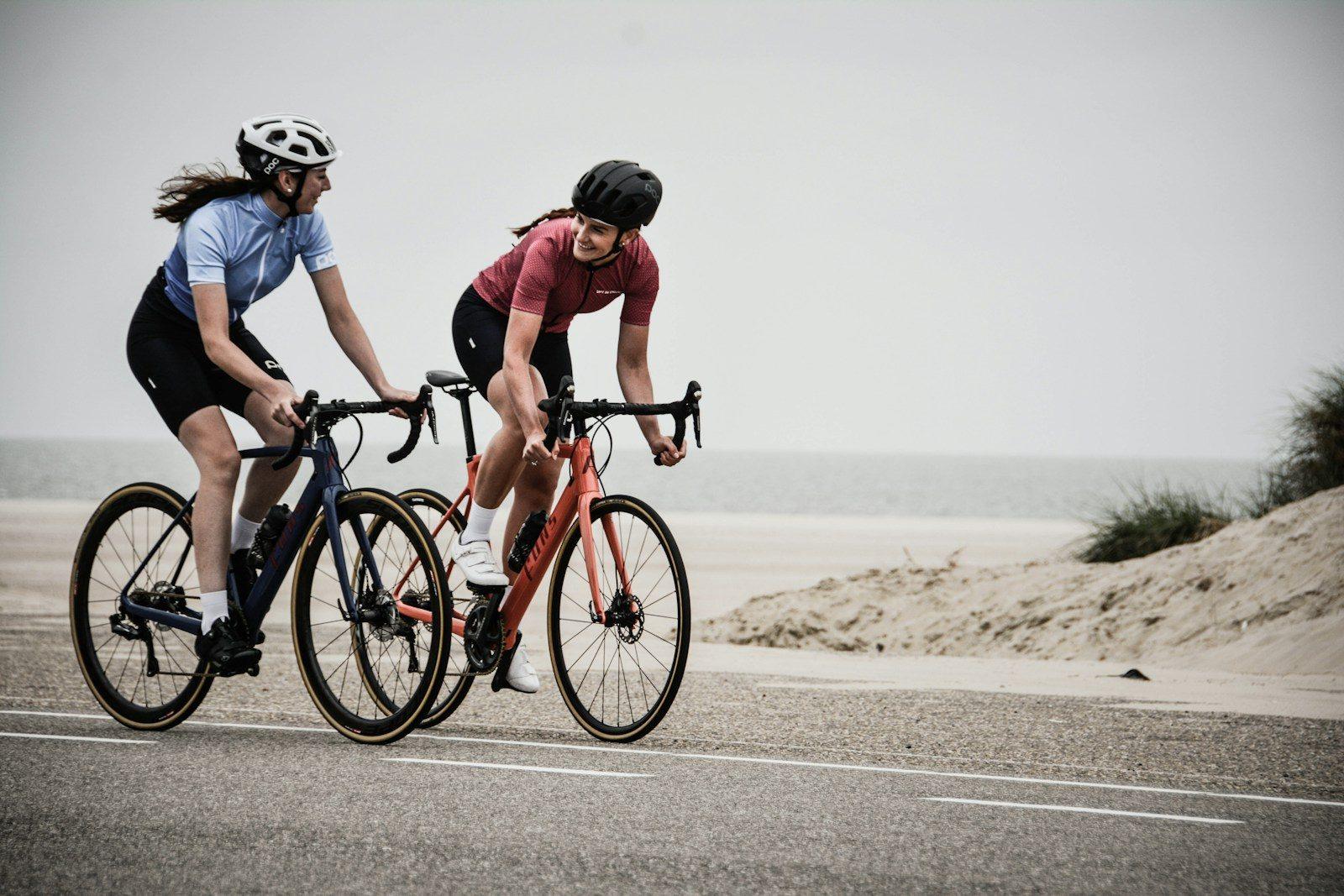
Cycling, both outdoors and on a stationary bike, delivers strong cardiovascular benefit and meaningful lower body muscular work with joint stress significantly lower than running or other weight-bearing exercise. The circular pedaling motion moves the knee through its range of motion in a controlled, supported arc that strengthens the muscles around the joint without the impact forces that aggravate many common joint conditions.
Research on cycling and joint health has found it beneficial even for people with established knee osteoarthritis, with studies showing reductions in pain and improvements in function with regular cycling alongside no worsening of joint structure. The key is appropriate bike fit, which determines the angle of knee flexion through the pedal stroke and has a significant effect on whether cycling feels comfortable or creates its own discomfort.
Stationary cycling offers additional control over resistance and intensity, making it accessible for people who are rebuilding fitness after a period of inactivity or managing a condition that requires careful monitoring of exertion. Recumbent bikes, which support the back and place the legs in front rather than below the body, are particularly joint-friendly and often more comfortable for people with hip concerns or lower back issues alongside their joint conditions.
Yoga
Yoga has developed a reputation in some fitness contexts as gentle or primarily flexibility-focused, which undersells what it actually delivers when practiced consistently. A well-rounded yoga practice builds significant strength, particularly in the stabilizing muscles around joints, improves balance and proprioception which reduces fall risk, develops flexibility that supports joint health over time, and provides documented benefits for stress, sleep quality, and mental health alongside its physical effects.
For joint health specifically, yoga is valuable because it trains the muscles that support and protect joints rather than loading joints directly. Strong quadriceps protect the knee. Strong hip abductors and external rotators protect both the hip and the knee. Strong core muscles reduce the load on the spine and the hips. Yoga builds all of these in a controlled, low-load environment that allows people to work within their current range of motion and expand it gradually over time.
Chair yoga, a modified form practiced with the support of a chair, makes yoga accessible to people with significant mobility limitations, balance concerns, or joint pain severe enough to make floor-based practice impractical. It delivers genuine physical benefit while removing the barriers that prevent many older adults or people with joint conditions from accessing yoga at all.
Tai Chi
Tai chi is a practice that deserves more attention in mainstream fitness conversations than it typically receives. Originating as a martial art, it has been studied extensively in the context of health and aging with results that are consistently impressive across a range of outcomes particularly relevant to joint health and healthy aging.
The slow, flowing, controlled movements of tai chi build leg strength and stability, improve balance and coordination, enhance flexibility, and develop the proprioceptive awareness that tells the body where its joints are in space, a capacity that declines with age and is directly related to fall risk. Falls are one of the most significant causes of injury-related morbidity and mortality in older adults, and tai chi is among the most evidence-supported interventions for fall prevention available.
Research has found tai chi beneficial for people with knee osteoarthritis, rheumatoid arthritis, fibromyalgia, and chronic lower back pain. It reduces pain and stiffness, improves functional capacity, and delivers these benefits with joint stress low enough to be accessible even during flares of inflammatory conditions. The meditative quality of the practice adds stress reduction and mental health benefits that many participants identify as equally valuable to the physical ones.
Elliptical Training
The elliptical machine was designed specifically to replicate the cardiovascular demand of running while eliminating the impact forces that make running hard on joints. The foot never fully leaves the pedal, which removes the landing phase of running where the majority of joint stress occurs. Research comparing joint forces during running and elliptical training has found the elliptical produces significantly lower peak forces at the hip and knee while delivering comparable cardiovascular training stimulus.
For people who enjoy the rhythmic, sustained cardiovascular effort of running but find it increasingly uncomfortable on their joints, the elliptical provides the closest functional substitute available. The inclusion of moving arm handles on most machines adds upper body engagement and increases overall caloric expenditure relative to lower body-only cardio.
The resistance and incline settings on most elliptical machines allow for significant variation in training intensity, making the machine appropriate for everything from gentle rehabilitation work to challenging cardiovascular training depending on the current needs of the person using it.
Resistance Training With Bands and Light Weights
Strength training is important for joint health rather than contrary to it, and resistance training using elastic bands or light weights provides the muscular stimulus that protects joints without the heavy loading that can be problematic for compromised joints. The muscles surrounding a joint are its primary protective mechanism. Strong muscles absorb and distribute forces that would otherwise be transmitted directly through cartilage and bone. Building and maintaining that muscular strength is one of the most effective things a person with joint concerns can do for their long-term joint health.
Resistance bands offer graduated resistance that can be matched precisely to current capacity, and the accommodating nature of band resistance, increasing through the range of motion rather than remaining constant, is particularly joint-friendly compared to free weights. Seated and supported resistance exercises remove the compressive load of standing work while still providing the muscular stimulus that builds protective strength.
Putting It All Together
The best low-impact exercise routine is the one that matches your current capacity, addresses your specific joint concerns, and includes enough variety to build both cardiovascular fitness and muscular strength. Walking and cycling build cardiovascular endurance. Swimming and elliptical training provide vigorous cardiovascular work with minimal joint stress. Yoga and tai chi build the strength, flexibility, and balance that protect joints and reduce injury risk. Resistance work with bands and light weights builds the muscular support that is the joint’s most important long-term protection.
None of these need to be done at high intensity or for long durations to be beneficial. Consistency across weeks and months delivers far more meaningful results than intensity applied occasionally. Three to five sessions per week of thirty minutes each, combining two or three of these modalities, gives the body the stimulus it needs to build and maintain fitness without accumulating joint damage.
Understanding how to keep your joints healthy for the long term goes beyond the exercise you choose in the present. The broader picture of protecting your joints across a lifetime involves a combination of movement choices, nutritional support, weight management, and lifestyle habits that compound into joint health that holds up well into your later decades.
Movement Is Always Available to You
The narrative that joint pain or aging means the end of meaningful physical activity is one worth challenging directly. Low-impact exercise offers a path to genuine fitness, healthy weight, strong cardiovascular function, muscular strength, mental wellbeing, and physical independence that is available to virtually everyone regardless of joint history or current limitations. The question is never whether you can move. It is which forms of movement serve your body best right now, and how you can build them into a routine consistent enough to deliver the results that show up not just in how you feel this week but in how you live the decades ahead.